For your information
You are being redirected to one of our divisional subsites which contains more detailed information on the required division. To navigate back to the main Invicta Group site, please click the link found in the footer at the bottom of the page.


- Systems
- Applications
- Services
- Projects
- Insights
- Contact
Contact

UK +44 1843 220 256

US +1 305 328 9444

UAE +971 4 277 6225

Qatar +974 4441 4340

India +91 79945 14049

Malaysia +60 16 286 6225
- Start your project
The retail applications of mobile shelving
22nd December 2025
Quick Quote
Contact David Learoyd
To get a quotation or arrange a free site survey - Call David Learoyd on
-
 UK
UK
Current location:
Quick Quote
Contact David Learoyd
-
UK
Current location:
Retail hasn’t died off in the way many doomsayers predicted, but it has changed significantly. While consumers still go out shopping in search of unique items, online shopping has changed the landscape, and shifted consumer expectations. New fulfilment demands and rising property costs meanwhile have reshaped the way retailers manage stock, ramping up the pressure to find smarter storage solutions.
One approach that is gaining increasing traction is the adoption of mobile shelving. As store footprints shrink and back-of-house capacity becomes more constrained, mobile shelving is proving its worth as a versatile and cost-efficient storage method for modern retailers—enabling them to adapt to fluctuations in stock turnover and variety while maximising their floorspace.
What is mobile shelving?
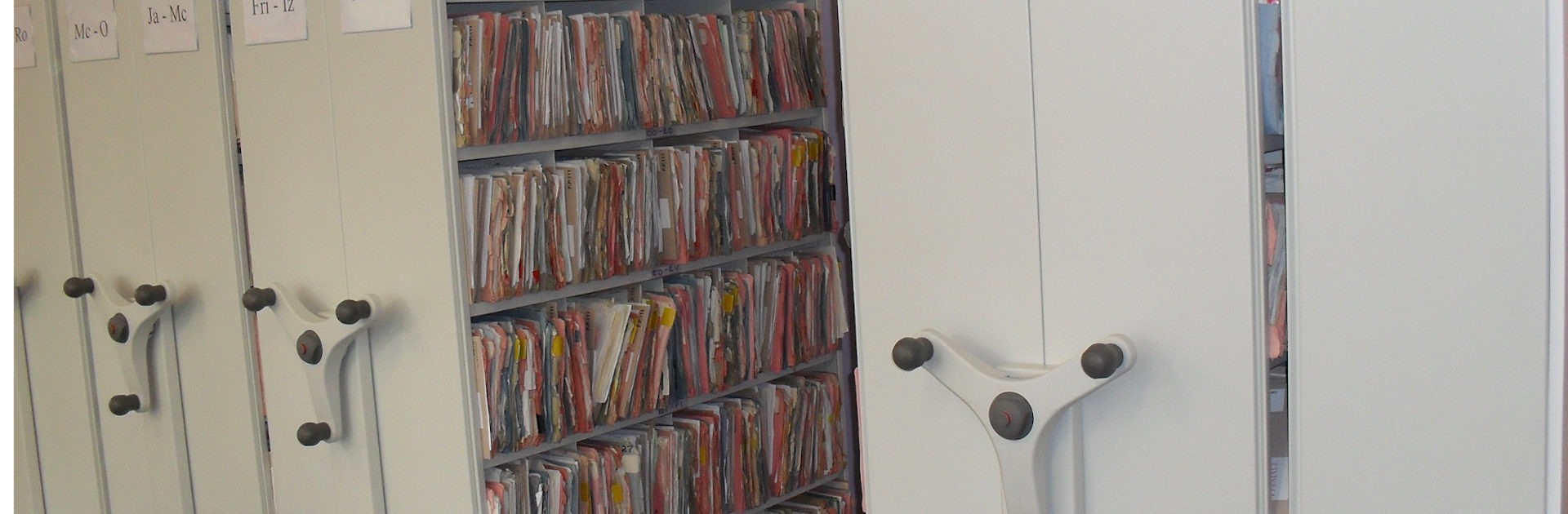
Mobile shelving is a high-density storage system that uses shelving bays sat on moveable carriages, which are then slid along floor-mounted tracks. Instead of requiring a permanent aisle between every row of shelves, the operator simply opens an aisle where it is needed by moving the carriages apart.
A bank of shelving that would traditionally require three or four aisles can function with just one, dramatically reducing wasted space. Mobile shelving systems can be manual, mechanically assisted, or fully powered, depending on the size and weight of the shelving system and the needs of the operator.
The core concept of mobile shelving is simple: remove unnecessary aisles, and turn fixed shelving into a compact, dynamic, and secure storage block. The carriages can support everything from standard shelving to hanging rails, garment storage, drawers, compartment trays, and heavy-duty shelving for bulky items.
This modularity is what makes mobile shelving so adaptable across the retail industry. The system can be designed for stockrooms, warehouses, archive rooms, e-commerce packing areas, and store back-of-house zones, providing a flexible and adaptable alternative to traditional static shelving.
The benefits of mobile shelving
One of the most significant advantages of mobile shelving is its ability to maximise the usable floorspace within a building. By eliminating redundant aisles, organisations typically gain between 40% and 70% more storage capacity in the same footprint, and can as much as double it. For retailers operating in densely populated cities or premium retail destinations, this space saving directly offsets high rental costs. Rather than relocating to a larger and more expensive unit, a retailer can often more than double its storage capacity within the existing store.
Another major benefit of mobile shelving is its flexibility. Because the carriages and shelves are modular, mobile shelving can evolve with a retailer’s needs. As product lines change, your mobile shelving can be modified to suit it, either by adding new accessories such as trays or garment rails, or respacing shelves, all without requiring major structural changes. Mobile shelving can also be integrated with smart features like RFID tagging, digital locks, and climate control systems—invaluable for retailers handling luxury goods, cosmetics or temperature-sensitive stock.
Mobile shelving also contributes to improved security. While mobile shelving units feature manual locks by default to protect them when closed, retailers storing high-value or easily pilfered items can specify increased security measures, with the potential for powered units with keypad entry, restricting stockroom access to authorised staff. This creates a safer, more controlled environment, minimising losses in a sector where shrinkage has a heavy financial impact.
The challenges facing the retail sector
The retail industry is resilient, but the past few years have been pushing it. As well as juggling rising costs across the board, consumer expectations are changing, and many retailers are having to diversify their SKUs to hedge against disruption. One of the most significant challenges remains the high cost of physical space. In spite of difficulties faced by high street retailers, floor space still commands a premium, even as online competition ramps up, and storage demands increase.
At the same time, the pace of product turnover is increasing. Seasonal trends, fast fashion, limited editions and promotional lines are all leading to more changeable stock profiles. Deliveries are also becoming a factor for retailers who may never have considered them, with even items like cosmetics now available on delivery apps. Traditional shelving, which is often rigid and space-hungry, is increasingly struggling to support these changes efficiently, with retail staff spending an inordinate amount of time rearranging layouts or moving stock.
Those same staff are a problem of their own. Faced with tight budgets, one of the first areas to feel cuts is back-of-house teams. The less accessible shelving is, the longer picking times are, and the more clutter could lead to mis-picks, damaged goods, or trips and falls. This is colliding with the likes of click-and-collect and same-day delivery to create a nightmare scenario for already overstretched staff.
Sustainability is also beginning to reshape retail strategy. Building extensions or relocating to larger premises both have a significant environmental impact, making internal optimisation a greener as well as leaner alternative. All of this is ramping up the pressure on retailers to extract more value from their existing footprint before considering expansion.
Why mobile shelving is well suited to retail
Mobile shelving is better suited to retail than it might appear at first glance. While you might imagine it being predominantly for document storage, the adaptability and modular nature of mobile shelving mean it can solve challenges of capacity, adaptability and efficiency within a retail environment. By requiring fewer aisles, the system significantly increases storage density in almost any stockroom, allowing retailers to hold more stock without encroaching on the shop floor. This is particularly valuable for fashion, sportswear, cosmetics and homeware stores, where SKU counts are high, and stockrooms are traditionally very cramped.
The flexibility of mobile shelving also suits the dynamic nature of retail. Promotional stock, seasonal items, and e-commerce fulfilment all pose challenges to retailers, who have changed their models to adapt, but often haven’t changed their premises. Mobile shelving allows your stockroom layout to be adapted to accommodate different formats, from hanging rails for garments to trays and bins for accessories, all using the same infrastructure. This reduces long-term costs, and makes the system a sustainable investment rather than a stopgap solution.
Operational efficiency can also benefit. Staff can access products more quickly because stock no longer needs to be spread thinly across multiple aisles. By improving organisation and reducing the traversal needed to find the right row, replenishment is faster, and click-and-collect orders can be fulfilled more quickly. A well-designed mobile shelving system can not only reduce unnecessary movement, but also minimise mis-picks, and provide clearer sightlines through the stockroom or warehouse.
Some retailers will also benefit substantially from the security features of mobile shelving. Lockable mobile shelving turns stockrooms into more controlled environments, where high-value items remain inaccessible without authorisation. Retailers dealing with fragrances, jewellery, electronics or designer goods can secure entire bays quickly at the end of the trading day, adding another layer of security within the building.
As mentioned earlier, sustainability is becoming increasingly important, particularly for public-facing businesses. The ability to dramatically increase storage capacity within your walls is a major plus for carbon savings, and is an investment in a hard-wearing and long-lasting resource. The benefits offered by mobile shelving can even reduce waste due to damage, while its form factor and simple construction allow it to be adapted to even awkwardly sized rooms or heritage buildings.
—
Mobile shelving is rolling out of the dusty confines of libraries, archives, and (perhaps not so dusty) medical facilities, and offering genuine value in retail. has become one of the most effective and versatile storage solutions available to the retail sector. In the face of rising costs, it’s an investment that quickly pays itself back in kind—reducing the need for costly expansions, and making your retail business more efficient.
If you’re interested in investing in mobile shelving for your retail business, we can help. Browse the menu above to find out more about our mobile shelving systems, or get in touch with us today to discuss your project, and request a complementary site visit.
Accreditations & Affiliations








Share/Like this page